Some places are more than a point on a map. They become markers in our lives, quietly waiting for us while the years pass.
Williams Clough is one of those places for me.
I first visited the Kinder Scout area when I was about ten years old. It was a school trip to Hayfield, and I can still remember the excitement of being taken out into country that seemed enormous to a young lad.
A teacher showed us how to read a map and use a compass. Those were not merely classroom exercises. They were practical skills that opened up a new world: a landscape could be understood, a route could be planned and, with care, you could find your own way through it.
That early visit began a relationship with Kinder Scout that would continue throughout my life.
I was not simply returning to a path. I was walking back through more than sixty years of my own life.
A place filled with memories
I returned to Kinder many times over the years. I have walked across it in very different conditions and seen how quickly the character of the place can change.
I remember Kinder Downfall when the wind was so strong that the water appeared to blow upwards. I have seen it frozen, with ice climbers making their way across a landscape transformed by winter.
Years ago, I even wild camped near the Williams Clough sign. Back then, the hills felt like somewhere I could keep pushing into, following the path simply to discover where it might lead next.
Returning in my seventies was always going to be different. The landscape had not become easier, and my body was no longer the same one that had crossed these hills decades before.
But the memories were still there.
The walk back
I was camping near Hayfield and set out towards Williams Clough. The early part of the route included the steep cobbled path beside the reservoir. My knees, affected by arthritis, made their opinion of the climb perfectly clear.
I stopped several times to rest. There was no point pretending I was still the ten-year-old boy, or even the younger man who had walked these hills without thinking very much about his knees.
I took my time and continued. Eventually, I reached the familiar Williams Clough sign.
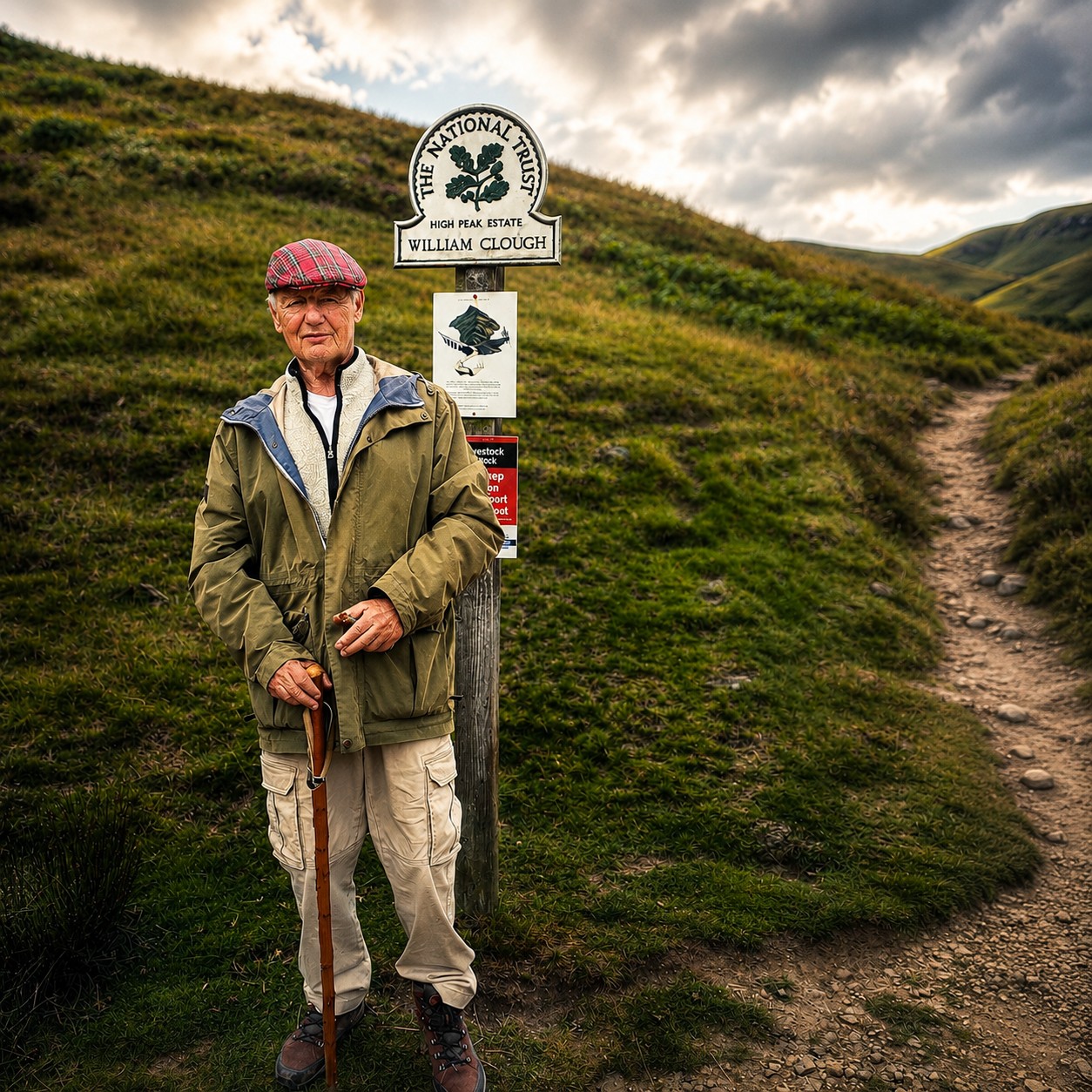
Standing beside it produced a mixture of feelings that is difficult to describe. It was just a signpost beside a path, but it connected the boy on his first school trip, the man who had returned and camped there, and the seventy-year-old standing in front of it now.
The decision that mattered
I knew before setting out that Williams Clough was my intended destination. Even so, standing there with the path continuing towards the Kinder plateau, part of me naturally wondered whether I should go farther.
The hills can tempt you in that way. A little farther. One more climb. Perhaps you can still do what you did before.
But experience should teach us something. Kinder's weather can change rapidly, the ground demands respect and I knew the return journey would still require energy from knees that had already worked hard.
So I chose not to continue onto the plateau. I turned back after reaching the place I had set out to reach.
That was not defeat.
In fact, it may have been one of the most sensible decisions I have made on Kinder. When we are young, achievement can mean going farther regardless. With age, achievement can mean knowing when enough is enough—and being comfortable with the decision.
I did not need to reach the top to prove that I still belonged in the hills.
Six miles and a lifetime
By the time I returned, I had walked about six miles. The distance mattered, particularly with my knees, but the walk meant far more than its mileage.
I had revisited the landscape where a teacher first placed a map and compass in my hands. I had stood close to where I once wild camped. I had looked towards a plateau carrying memories of wind, ice, adventure and many earlier versions of myself.
My only real regret was that I had not brought a map and compass with me. I still know how to use them, even after many years, and it would have felt right to carry those tools back to the place where I first learned their value.
Modern navigation is useful, but the old skills provide something more than directions. They teach awareness, independence and respect for the ground beneath your feet.
The path continues
The photograph of me standing beside the Williams Clough sign says something that words alone cannot quite capture.
Behind me, the path continues into the hills. I am not the young boy who first saw it, and I no longer need to follow every path to its furthest point.
But I am still there.
Still outdoors. Still curious. Still making my own decisions.
Growing older inevitably changes what we can do. It does not erase what we have done, and it does not prevent us from finding new ways to enjoy the places that have mattered throughout our lives.
I came away from Williams Clough feeling proud rather than disappointed. I had listened to my body, respected the hill and completed the walk I intended to make.
The sign was still there. The path was still there. And so was I.